
Cults in The Landscape of Modern Society
Written by Steven Van Neste

The topic of cults and undue influence is a strange one, it appears as something far away removed from the ordinary human, appears as something to which only the extremely naïve and gullible fall prey. Cultism is viewed as a fringe issue, something that has little bearing on the regular flow of society, and the images it conjures are usually those few extreme cases where cults have made headlines due to mass casualty events. The outlandishness of belief is perhaps what is most attributed to cultism, yet this is merely because it is only such cults that tend to make headlines, and hence we do not feel as if it is something we ought to ever be concerned of. Yet therein lies the problem, for cultism and undue influence do not necessarily involve something extreme, or perhaps more important, extremity is something that can only occur after a certain period of time. A group can begin very innocently, let us say as a book club, and suddenly turn into something more nefarious; indeed, many large cults tend to operate in a tiered manner, whereby the individual is recruited through an outer shell appearing as a separate entity (Galanter, 1989; Stein, 2017).
Cults came to the public forefront starting with the counterculture rise in the 1960s, the dissatisfaction of youth with the way society was heading—especially due to the chaos caused by the Vietnam War—created an atmosphere rife with a need for new ways of thought and creativity, as well as interpersonal awareness. Obviously, the counterculture movements are not where rebellion between the youth and the adults began, but due to the rise of mass media and the arrival of new forms of music, as well as new forms of spirituality, it came to be on a much larger scale. As shall be seen later on, feeling alienated from a society that does not seem to listen and seems only concentrated on waging war, a new need for attachment structures arose, since after all the desire to belong runs deep in each one of us. When everything remains the same old then where else is one supposed to turn to? In this respect, it ought to become clear how undue influence is not such a rarity after all, and that the principles of it are part of our mind. That each person may fall prey to undue influence is because the pathways naturally exist within our psyche—the kid in school who falls prey to drugs etc. because of hanging with the wrong kind of people has essentially fallen prey to undue influence.
Once Pandora’s Box has been opened it is too late, we cannot stuff back inside what has escaped, the Vietnam War may have ended and the original counterculture might be a thing of the past, but the larger movement remains. There is always some war—whether literal or metaphoric—and there always shall be tension between youth and adult authority. The growth of society has come together with ever more channels of exposure, and hence ever more desire for youth to find their own expression. The Satanic Panic of the 1980s came with a renewed focus on cults, but what was the case here was mere hysteria propagated by Christian Fundamentalists. Of interest, however, is that the Satanic Panic did bring about a whole new level of research, centered around the fallibility of memory, as well as the potential dangers of talk therapy, especially as practiced by rogue therapists (Ofshe, 1994; Spanos, 1996). The damage done here was not by destructive cults, at least not Satanic ones, but through the cultism perpetrated by Christian Fundamentalism, especially through their reactionism against heavy metal music and its use of satanic themes.
The current-day cultism of QAnon is largely an offshoot of the Satanic Panic combined with a hotchpotch of conspiracy theories and oddities. The problem of our current day is very driven by a wide-open world both geopolitically and technologically, this spurs the rise of right-wing extremism and leads to further distortions of conservatism. In a world dominated by a seemingly “increasing brutality of reality”, the philosopher Simon Critchley sees two forms of nihilism at play, namely a passive one whereby people seek comfort in whatever offers mystical stillness, and an active one, which is marked by terror and propaganda (Critchley, 2017). The greater the presence of otherness, the greater the fear, and even more one becomes vulnerable to indoctrination by ideas promising a homogenous golden age that has been stolen by something foreign. The great sadness here is that for many it is easier to commit to some absurd fantasy than it is easy to meet the other halfway; more important, the more we attempt to run away from otherness under the guise of a commitment to some greater mystical self, the more we come to splinter ourselves and dwell in delusion.

It is hard to establish a proper definition of what exactly is meant by “cult” as it applies to contemporary society, the best way to think about it is by framing a cult as this or that mode of worship which—partially or wholly—infiltrates upon one’s selfhood and/or self-responsibility. It also ought to be said that a cult is not necessarily destructive or even dangerous, nor should the focus necessarily be on the beliefs held, but rather on their functionality and how they might alter or control behavior. What has greatly hampered cult research is that too often it has been used as a tool to further ideas held by conservatives and fundamentalists, indeed, the anti-cult movement can be traced back to Walter Martin, an American Baptist minister who in 1960 founded the Christian Research Institute. The Christian anti-cult movement sees everything that is other as a cult, a habit largely continued by the Cult Awareness Network founded by Ted Patrick in 1978.
The problem with the traditional anti-cult mentality is that it lacks a level-headed approach, and lacks serious educational value, as it is too preoccupied with forcing its own agenda. Even if the Cult Awareness Network operated from a more secular point-of-view than Christian anti-cultism, its focus was still on forcing an idea of how society should be, and a promotion of more traditional family and socio-economic values. With the Cult Awareness Network, we also saw the rise of forced deprogramming, which in essence is as backward and dangerous as the religious practice of exorcism. On the other side we have the extremity of cult apologists such as Anson Shupe or David Bromley, who although they rightly call out the hysteria of the anti-cult mentality—as well as draw our attention to the fact that not every new religious movement is a cult—fail to understand the psychological damage that can be done, as well as having a tendency to dismiss the suffering of those who may have been victims of cults or undue influence. A final problem is that cults themselves may present themselves as being anti-cult, for instance when the Cult Awareness Network went bankrupt in 1996 its assets were bought up by the Church of Scientology.
As touched upon already the cult problem is a dynamic process centered around socio-economic changes and a growing impetus of new thoughts, attitudes, and awareness. The process lies in the clash that can be defined as progressive versus conservative, some not only welcome change but actively seek it, whereas others not just fear progress and otherness, but vehemently seek to annihilate it. One fact, however, is that progress is inevitable and even more so has been with us since the dawn of civilization; conservatives who seek to return to this or that former greatness or dwell on the nostalgia of some supposed past golden age, forget that any given epoch is always a product of progress—there can be no future without progress. The push and pull between the excesses of both progress and conservation leads to positions of ever more running away into exorbitance; the less accepted and understood one feels, the more shall rise the drive to find fulfillment in something charismatic—the same counts for those who feel more and more threatened by the presence of otherness. There is not anything we enjoy today that is not somehow a product of a socio-economic process, multiculturalism, and geopolitical evolution.
What especially drives new religious movements is socioeconomic and geopolitical evolution, as the world grows larger man more and more comes to feel uneasy and begins to question himself in this ever-expanding reality. Humanity is defined through interpersonal contact (Asch, 1952), but the arising problem here is that the more we are confronted by otherness, the greater may become the drive to try and take control over the interpersonal. Even in a tolerant society, a person will generally prefer to live alongside those who are similar; a person may not mind living in a mixed neighborhood, as long as one feels not greatly outnumbered (Harford, 2008). Though consciously we may not be prejudiced against otherness, we may be so in an unconscious way (Sapolsky, 2017; Wilson, 2002), yet such unstated bias may be manipulated through undue influence; that we are not aware of unconscious drives means that we are more vulnerable to being played upon them. As the world grows larger we come to stand in moments of confusion and uncertainty, which leads to a renewed drive for meaning and clarity, a yearning for a self-community. It is not just death that is a problem but so is consciousness, it is not necessarily the idea of self-responsibility that is hard, but rather the meaning of responsibility itself.
About The Author
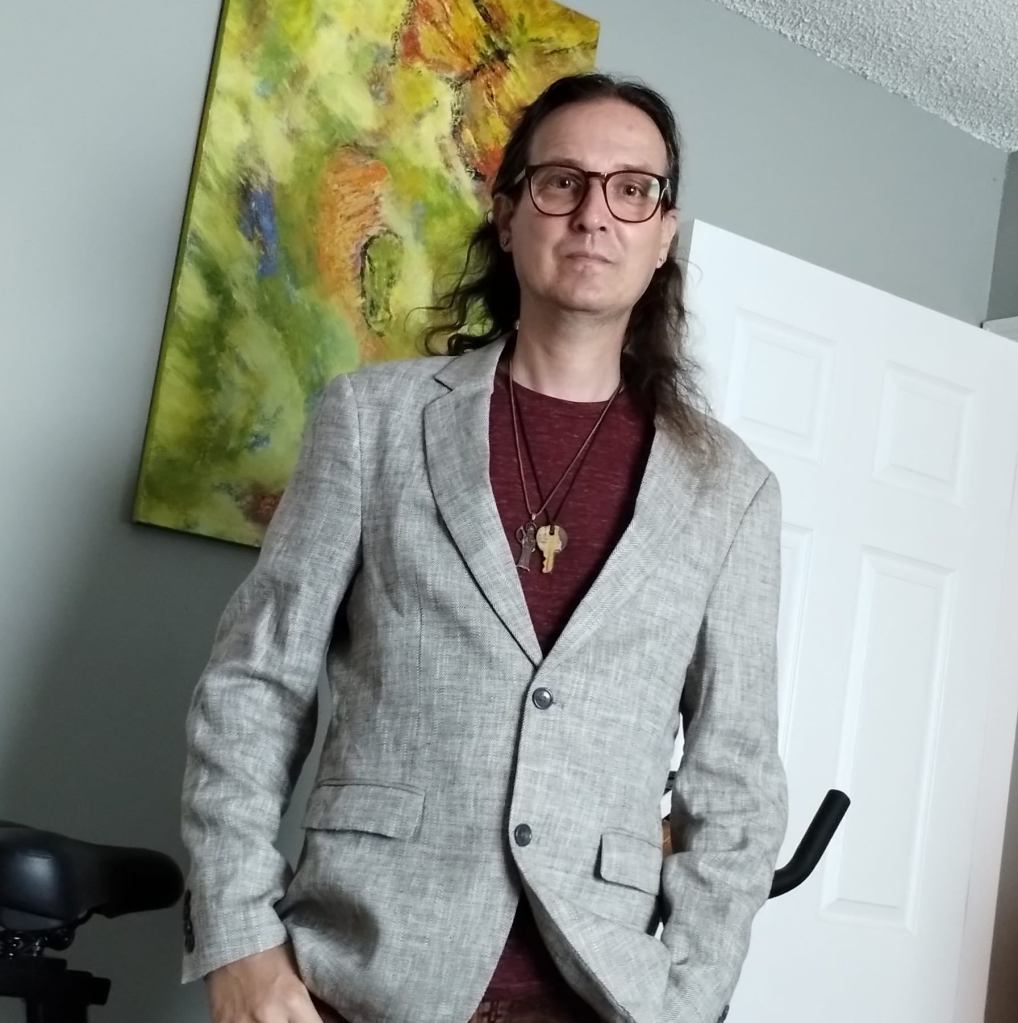
Steven Van Neste accepts the role of Director of Thinking Agenda LLC and assists as an Expert and Researcher in cult-related cases. He is currently working on a book on cults and a separate book on the MIND model of cults.
Steven Van Neste is a Belgian-born researcher whose initial field of interest was philosophy, but over the years has moved almost exclusively into psychology, neuroscience, and cults.
 Stephen A. Kent